
The Future of Access Control: Guest Passes, Signals, and Policy
How estate access control is moving from reactive gate checks to clearer policy enforcement and earlier risk signals.
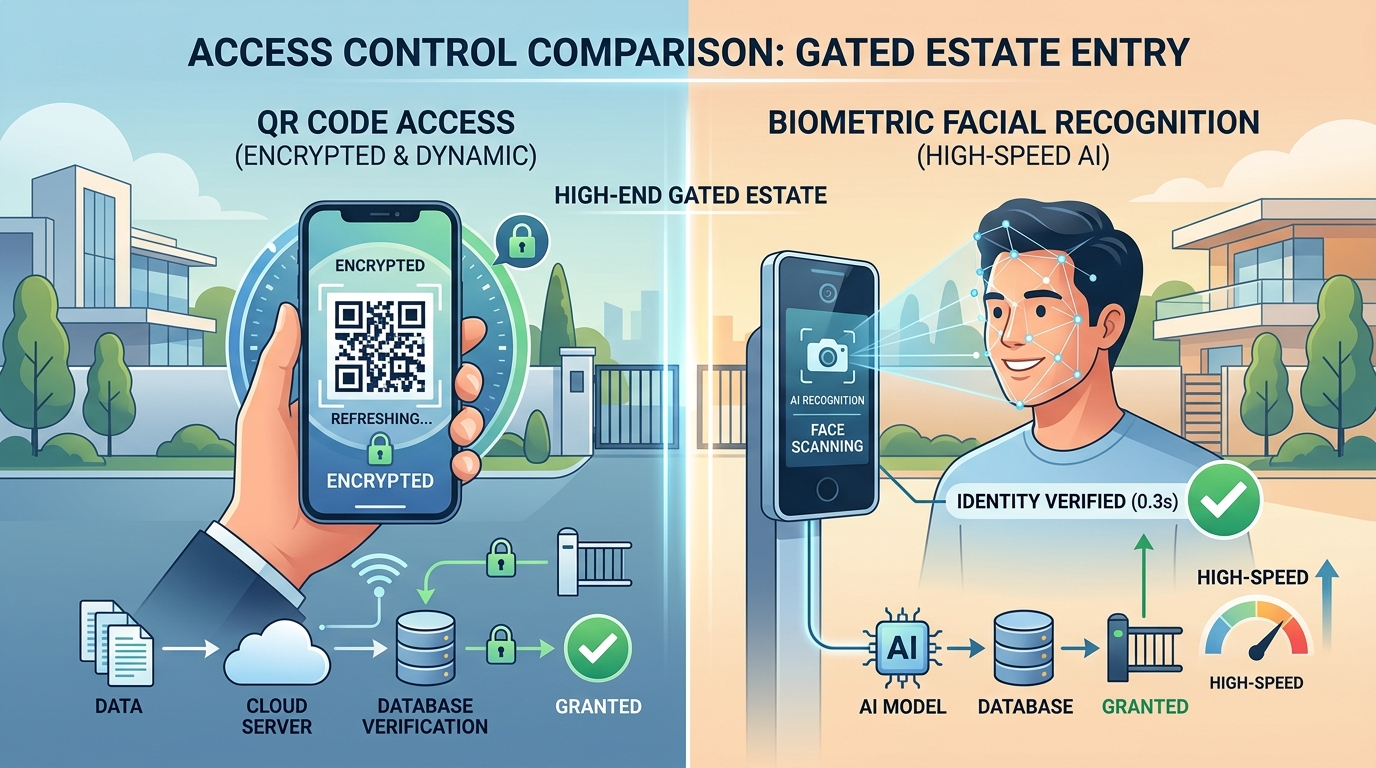
Access control used to be reactive. A visitor arrived, the gate team called a resident, and the estate learned about problems only after a queue or incident formed.
The next phase is more useful: guest passes, gate records, and estate rules working together so managers can see risk earlier and act with better context.
1. Behaviour Signals
Clearaccess can help managers notice patterns that are difficult to catch manually:
- Guest passes used repeatedly near expiry.
- Multiple failed verifications for the same apartment.
- Visitors arriving at unusual times compared with estate policy.
- Gate-team devices that frequently require manual override.
These signals are not a replacement for judgement. They give managers a better starting point for review.
2. Frictionless Visitor Entry
The best security experience is calm. Residents should be able to issue a guest pass quickly, visitors should know what to present, and gate teams should see a clear verification result.
That means the product must hide complexity where possible while keeping accountability in the background.
3. Privacy-Aware Verification
Hardware can strengthen security, but it should not be the default answer for every estate. Clearaccess starts with guest-pass verification and gate records, then supports expansion hardware when the estate has the policy maturity to use it responsibly. Any future biometric integration is local, one-to-one verification only, separately approved, and never a face-search or surveillance workflow.
4. Connected Estate Rules
The future is not only opening gates. It is applying estate rules consistently:
- Dues status can affect guest-pass permissions.
- Visitor fees can be collected before verification.
- Shared-space bookings can connect to guest-pass rules.
- Emergency exceptions can be recorded without hiding the reason.
Conclusion
Access control is becoming the operating layer for estate movement. The estates that benefit most will be the ones that make the workflow simple for residents, clear for gate teams, and reviewable for managers.
Keep exploring.
Continue with field guides connected to this topic.
The State of Estate Access Security in 2026
Why residential estates are replacing legacy cards and paper ledgers with guest passes, gate records, and software-first controls.
Read the storyPhysical Security Compliance for Estate Operations
How accountable gate records, scoped permissions, and retention rules help estates prove access-control discipline.
Read the storyThe Future of Access Control in Nigerian Estates
Nigerian residential estates are moving from handwritten ledgers to software-first gate operations, guest passes, and accountable gate records.
Read the story