
The State of Estate Access Security in 2026
Why residential estates are replacing legacy cards and paper ledgers with guest passes, gate records, and software-first controls.
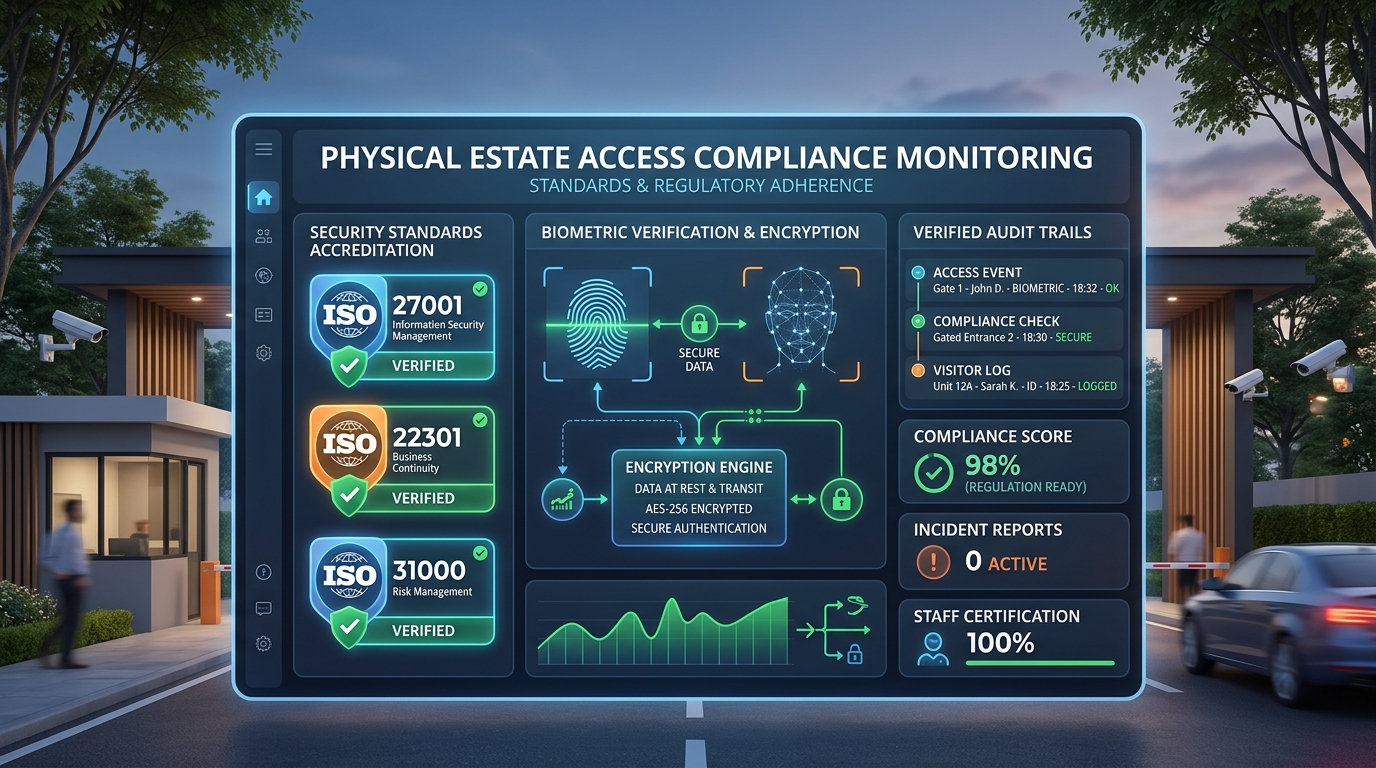
For many estates, physical security still means a manual ledger, phone calls to residents, and plastic cards that are difficult to revoke. That model is under pressure. Residents expect faster visitor entry, managers need better visibility, and owners want proof that policies are enforced consistently.
The Problem With Legacy Credentials
Cards, stickers, and paper passes are easy to share and hard to explain after an incident.
The deeper issues are operational:
- Weak identity context: A card proves someone has a credential, not that the right resident or visitor is using it.
- Poor reviewability: Paper records are slow to search and often incomplete.
- Manual deactivation: Lost cards and moved-out residents can stay active longer than estate policy allows.
- No apartment context: Visitor permissions often float outside the apartment assignment and dues status that should govern them.
The Shift to Workflow-First Security
Modern estate access control starts with the workflow:
- A resident issues a guest pass under estate rules.
- The visitor presents the pass at the gate.
- The gate team verifies the pass and records the result.
- The manager can review exceptions, traffic, and disputes.
This simple chain is more important than any single device.
Where Intelligence Helps
Automation becomes valuable once the workflow is reliable. Clearaccess can help estate managers spot:
- Repeated failed verification attempts.
- Guest passes reused outside their intended window.
- Apartments with unusual visitor traffic.
- Access points with repeated manual overrides.
These signals support better decisions without making the gate workflow harder for the gate team.
Conclusion
The future of estate access security is not just smarter hardware. It is clearer operating accountability. Residents, gate teams, managers, and owners all need a system that shows who did what, when, and under which estate rule.
Keep exploring.
Continue with field guides connected to this topic.
The Future of Access Control: Guest Passes, Signals, and Policy
How estate access control is moving from reactive gate checks to clearer policy enforcement and earlier risk signals.
Read the storyPhysical Security Compliance for Estate Operations
How accountable gate records, scoped permissions, and retention rules help estates prove access-control discipline.
Read the storyThe Future of Access Control in Nigerian Estates
Nigerian residential estates are moving from handwritten ledgers to software-first gate operations, guest passes, and accountable gate records.
Read the story