
Physical Security Compliance for Estate Operations
How accountable gate records, scoped permissions, and retention rules help estates prove access-control discipline.
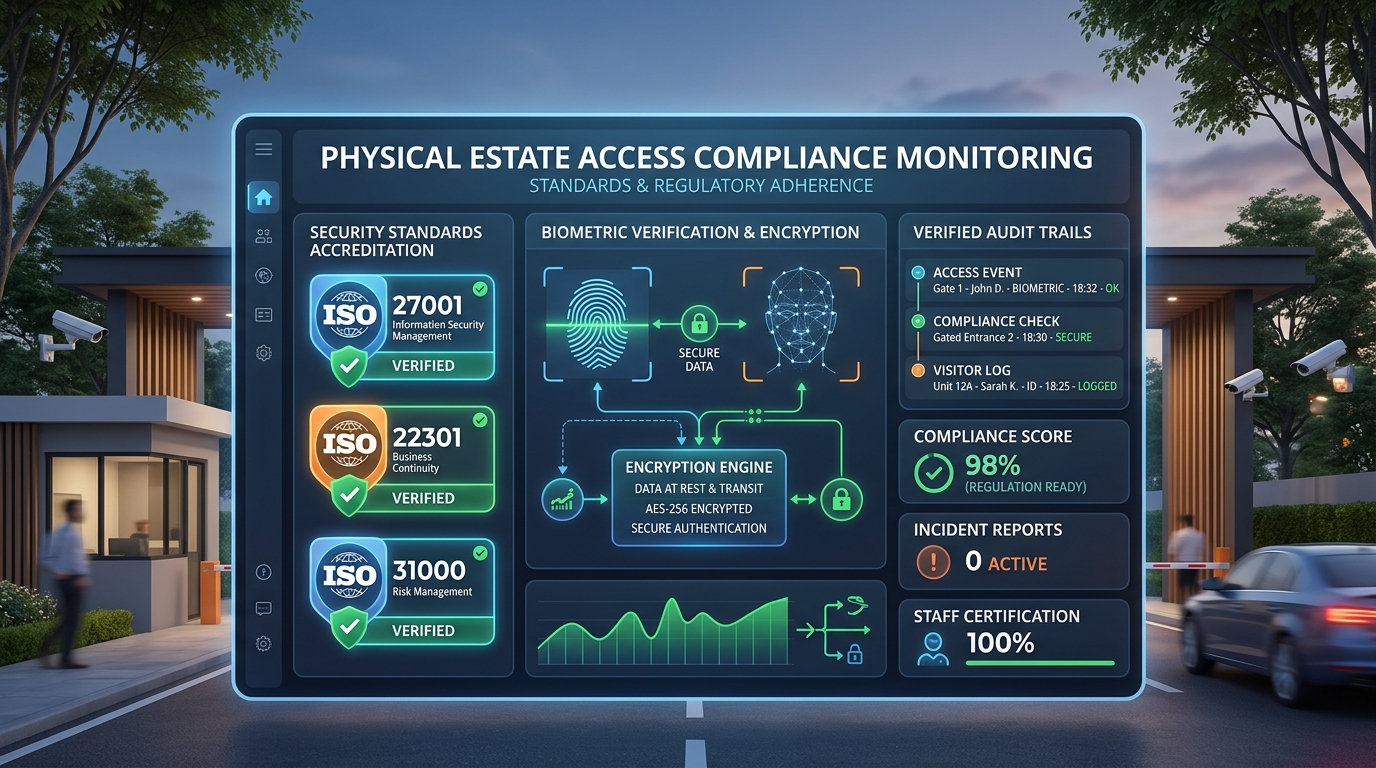
Compliance is not only a corporate paperwork exercise. Residential estates also need to show that visitor entry, resident permissions, gate-team actions, and sensitive records are handled consistently.
For estates, the practical compliance question is simple: can the manager explain who entered, who approved the visit, when it happened, and which estate rule applied?
The Estate Compliance Gap
Manual gate operations create predictable gaps:
- Shared notebooks with incomplete visitor details.
- Unclear resident approvals over phone calls.
- Gate-team decisions that are not tied to a specific user or device.
- Guest passes that remain valid longer than intended.
- Manager overrides without a recorded reason.
These gaps make incident reviews harder and weaken resident trust.
What Clearaccess Records
Clearaccess helps estates build reviewable evidence through:
- Guest-pass history showing who issued the pass and for which apartment.
- Gate records showing verification time, access point, result, and gate-team user.
- Role-based permissions separating owner, manager, resident, and gate-team responsibilities.
- Override records that capture who approved an exception and why.
Data Protection Basics
Estate access records can reveal sensitive movement patterns. Managers should define:
- Who can view or export records.
- How long visitor records are retained.
- Which support roles can access operational data.
- How residents can ask questions about their own records.
Clearaccess supports privacy-conscious operations by keeping data tied to the workflow and limiting access by role.
Compliance Starts With Daily Discipline
The best compliance posture is built through ordinary habits. Every visitor entry should be verified, every exception should be explainable, and every manager should know where to find the record.
When access-control discipline is part of the daily workflow, evidence is available when the estate needs it.
Keep exploring.
Continue with field guides connected to this topic.
The Future of Access Control: Guest Passes, Signals, and Policy
How estate access control is moving from reactive gate checks to clearer policy enforcement and earlier risk signals.
Read the storyThe State of Estate Access Security in 2026
Why residential estates are replacing legacy cards and paper ledgers with guest passes, gate records, and software-first controls.
Read the storyThe Future of Access Control in Nigerian Estates
Nigerian residential estates are moving from handwritten ledgers to software-first gate operations, guest passes, and accountable gate records.
Read the story