
Cloud vs. Local Access Control for Estates
How estate managers can compare cloud-managed, offline-ready access control with traditional local gate systems.
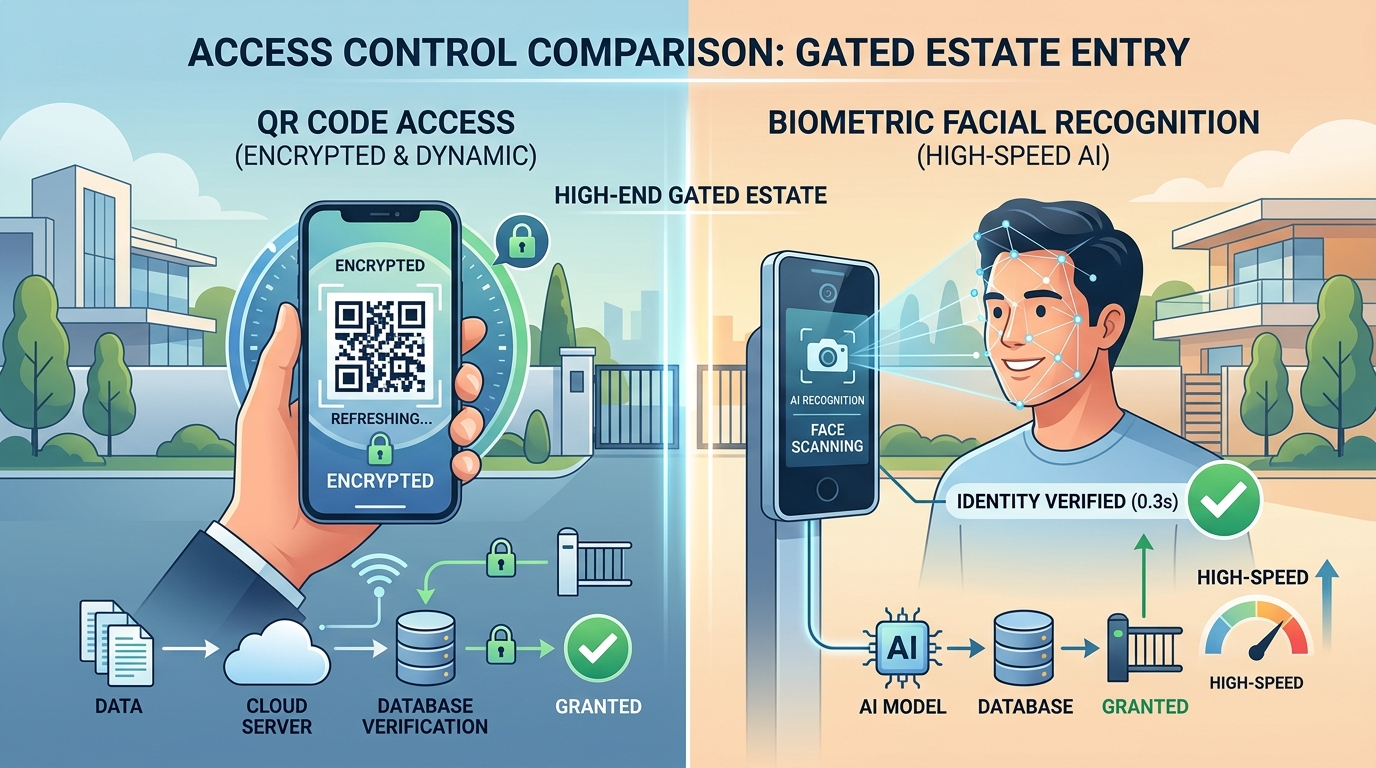
Estate managers often hear a false choice: keep everything local or move every access decision to the cloud. Real operations need a hybrid answer. The gate must keep working during weak connectivity, while managers still need cloud visibility, updates, and reporting.
1. Reliability and Offline Mode
Traditional local systems can keep a gate running, but they often leave managers without live records or remote policy changes.
Clearaccess uses a software-first approach where critical verification data can be available to gate-team devices while cloud services handle management, analytics, and sync. The estate should not lose its core visitor entry workflow because of a short network interruption.
2. Policy Updates
Local-only systems make policy changes slow. A manager may need someone to update a device, reconcile a spreadsheet, or brief every gate-team member manually.
Cloud-managed workflows make policy changes visible across the estate faster. If a manager changes visitor rules, dues restrictions, or an apartment assignment, the gate workflow can reflect that change without a manual paper handoff.
3. Gate Records
Local notebooks and device-only logs are hard to audit. Estate owners need records they can review when residents dispute a denial, a visitor overstays, or an incident occurs.
Clearaccess creates structured gate records that support manager review, resident communication, and owner reporting.
4. Hardware Timing
Local systems often start with hardware procurement. That can work for mature estates, but many estates need to prove the resident and gate-team workflow first.
Clearaccess supports software-first rollout, then optional expansion hardware such as readers, scanners, cameras, or barrier integrations when the estate is ready.
5. Total Operating Cost
Cost is not only device price. Estates should include training time, manual reconciliation, support needs, lost cards, resident complaints, and management reporting.
A cloud-managed, offline-ready model gives estate managers a better balance: resilient gate verification with less manual administration.
Conclusion
Choose access control based on the workflow you need every day. The right system should help residents issue guest passes, help gate teams verify them, and help managers see what happened without chasing paper.
Keep exploring.
Continue with field guides connected to this topic.
5 Access Control Mistakes Estates Should Avoid
The most common gaps in residential estate gate operations, from reusable passes to unclear override rules, and how to fix them.
Read the storyResident-Issued Guest Passes: A Practical Playbook
How estates can let residents invite visitors while keeping gate-team verification, manager oversight, and estate rules intact.
Read the storyEmergency Access Playbook for Residential Estates
How estates can support urgent visitor entry, emergency teams, and manager overrides without weakening everyday access policy.
Read the story