

Automated Parking Access for Residential Estates
How estate managers can connect vehicle entry, resident permissions, visitor passes, and payment rules without starting with a hardware-heavy rollout.
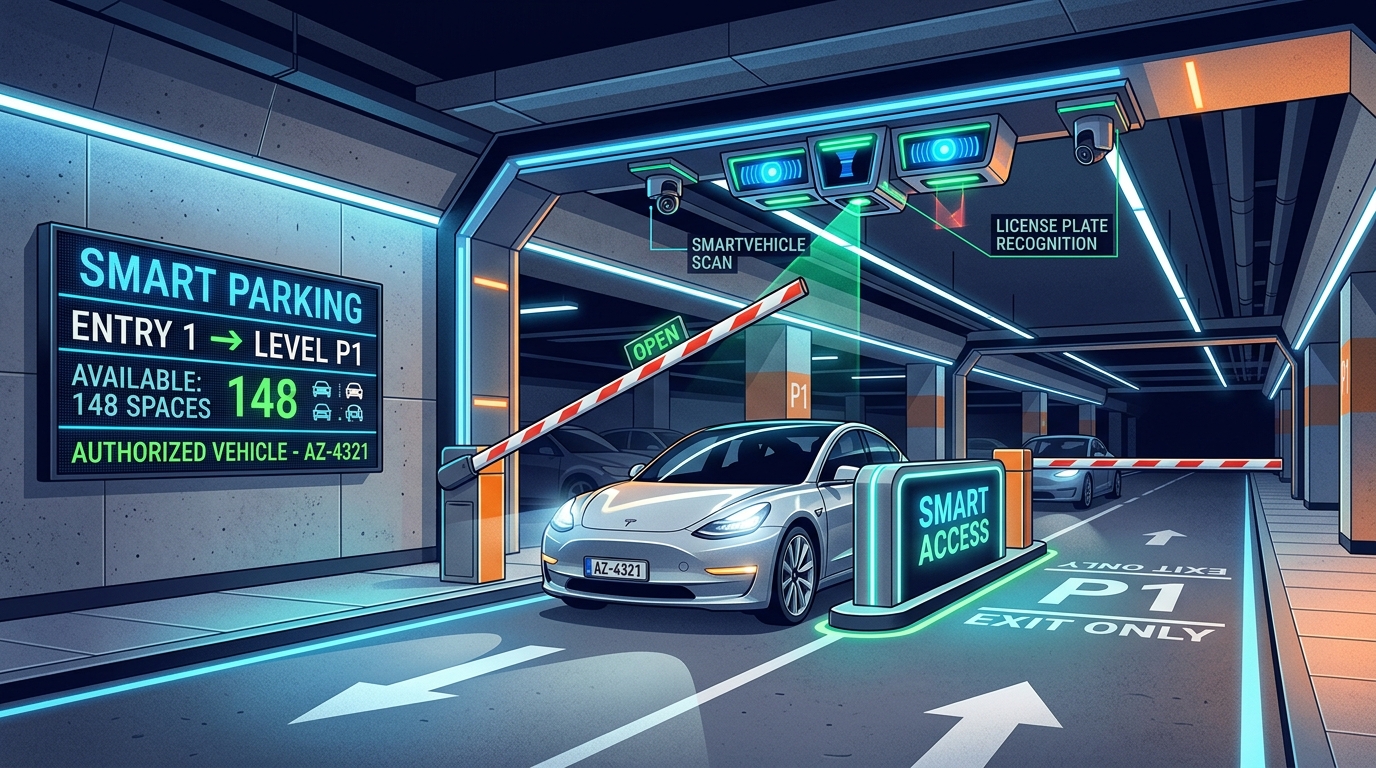
Parking is often the first place residents feel gate friction. A missing sticker, an unregistered visitor vehicle, or a slow manual check can block the same entrance everyone uses.
ClearAccess approaches parking as part of estate gate operations, not as a separate island.
Start With Vehicle Context
Before adding cameras or barriers, estates need reliable records:
- Which apartment owns or uses the vehicle?
- Which resident approved a visitor vehicle?
- Which gate verified the entry?
- Was the entry tied to a visitor fee, event, booking, or exception?
Once that context is clean, hardware integration becomes much easier.
Use Guest Passes for Visitor Vehicles
Visitor vehicle access works best when a resident-issued guest pass carries the needed details: plate number, expected arrival window, apartment destination, and any parking rule that applies.
At the gate, the team verifies the pass and records the result. If the estate later adds ANPR or barrier hardware, the same policy can drive the automated decision.
Connect Parking to Estate Rules
Automated parking can support:
- Resident vehicle limits per apartment.
- Paid visitor parking after a free window.
- Contractor or vendor time windows.
- Event parking caps.
- Shared-space booking access.
The goal is predictable enforcement, not surprise gate-side negotiation.
Add Hardware When It Has a Job
Expansion hardware such as cameras, card readers, or barrier controls should answer a clear operational need. If the workflow is already defined in ClearAccess, hardware can inherit the estate policy instead of creating a second source of truth.
Automated parking succeeds when software, gate teams, and hardware all follow the same estate rules.